

Blending Technical and Fundamental: A Moving Average Trading Strategy with Revenue Growth
Hey there, fellow traders! I’m excited to share with you a strategy that’s been a game-changer for me – combining the power of the moving average indicator with fundamental analysis, specifically revenue growth. This moving average trading strategy has helped me make more informed decisions and, honestly, it’s made trading a whole lot more interesting!
The Magic of Moving Averages
First things first, let’s talk about moving averages. These nifty little MA indicators have been my go-to for years. They’re like the smooth jazz of the trading world – they filter out the noise and give you a clear trend line, helping you understand market trends and price action.
Here’s the gist of how to read moving average:
- A moving average is the average price of a stock over a specific time frame
- It “moves” because it’s constantly updated as new price data comes in
- The most common types are Simple Moving Averages (SMA) and Exponential Moving Averages (EMA)
I remember when I first started learning how to use MA – it was like putting on glasses for the first time. Suddenly, the market’s movements made so much more sense! Understanding what MA is in trading can really transform your approach.
Revenue Growth: The Fundamental Powerhouse
Now, let’s talk about the fundamental side of things. Revenue growth is like the heartbeat of a company. It tells you how well a business is expanding its operations and increasing its sales, which can be a great indicator of market sentiment.
Why I love revenue growth:
- It’s a clear indicator of a company’s health
- It often correlates with stock price in the long run
- It’s harder to manipulate than some other metrics (I’m looking at you, earnings per share!)
The Secret Sauce: Integrating Moving Averages with Revenue Growth
Here’s where things get exciting. We’re going to blend these two powerful tools to create a robust SMA trading strategy.
- Use Moving Averages for Trend Identification: Start by plotting a 50-day and 200-day moving average chart. This combination is great for identifying support and resistance levels.
- Revenue Growth Screening: Look for companies with consistent revenue growth over the past few quarters.
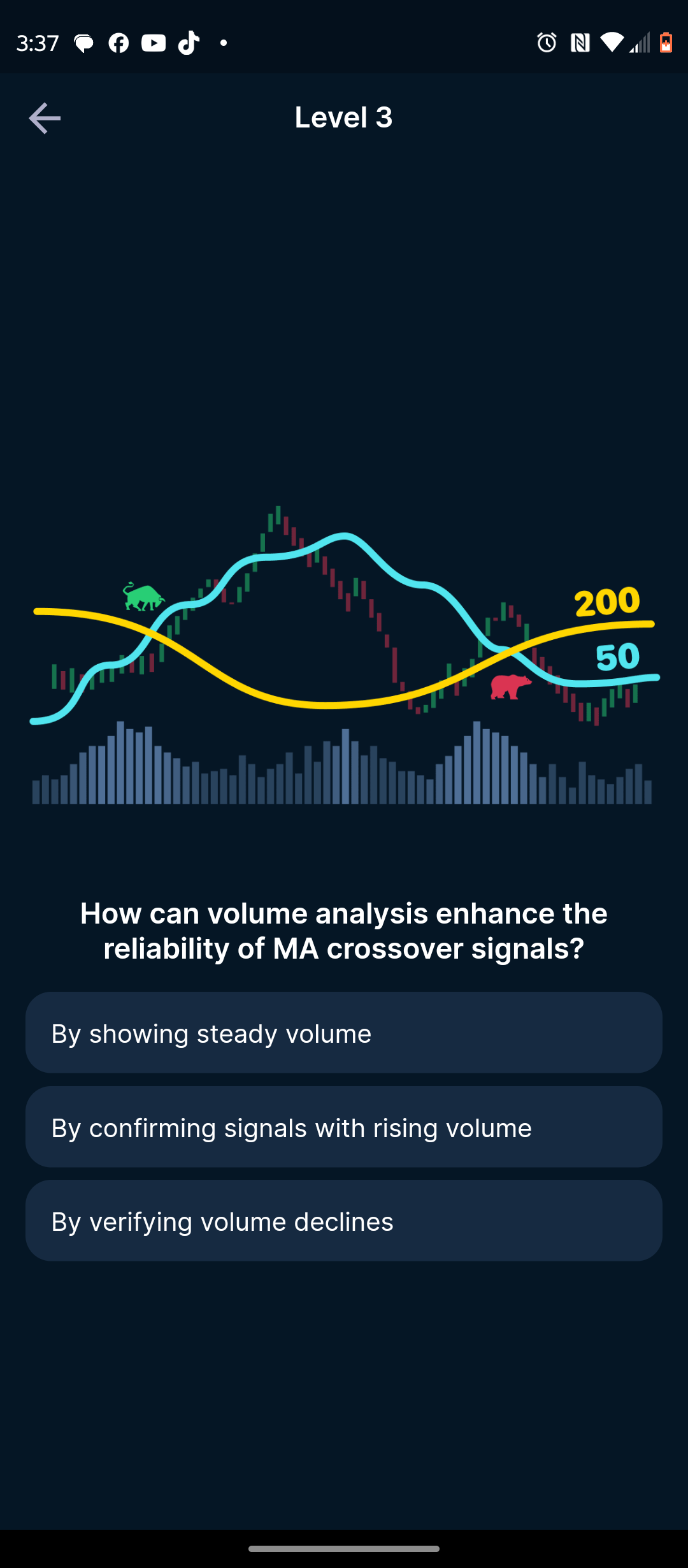
- The Golden Cross: When the 50-day MA crosses above the 200-day MA, it’s typically a bullish signal. This moving average crossover is a key part of our strategy. If this happens for a company with strong revenue growth, it’s time to pay attention!
- Confirmation: If the stock price is above both MAs and the company has shown accelerating revenue growth, consider it a strong buy signal. This is where understanding price fluctuations and mean reversion can be helpful.
- Exit Strategy: Consider selling when the 50-day MA crosses below the 200-day MA (sometimes called a “death cross”), or if revenue growth starts to decelerate significantly. This can help you identify potential trend reversals.
Applying the Strategy Across Timeframes
One of the beautiful things about this moving average trading strategy is its versatility. Let’s break it down:
Day Trading
- Use shorter-term MAs (e.g., 10-day and 30-day). Some traders even use the best EMA for day trading, like the 9 EMA.
- Focus on companies releasing positive revenue news or earnings reports
- Pay attention to short-term trading signals and breakout trades
Swing Trading
- Stick with the 50-day and 200-day MAs, often considered the best moving average for swing trading
- Look for companies with consistent quarter-over-quarter revenue growth
- Use the MA10, MA50, MA200 combination for a more comprehensive view
Position Trading
- Consider longer-term MAs (e.g., 100-day and 300-day)
- Focus on year-over-year revenue growth trends
- Pay attention to larger market trends and sentiment
Long-term Investing
- Use monthly MAs (e.g., 12-month and 24-month)
- Look for multi-year revenue growth patterns
- Consider using the 20 moving average as an additional reference point
Advanced Considerations
As you become more comfortable with this strategy, you might want to explore some advanced concepts:
- Volume Weighted Moving Average (VWMA): This can provide additional insights by incorporating trading volume.
- Dynamic Support and Resistance: Moving averages can act as dynamic support and resistance levels.
- Overbought and Oversold Conditions: Combine MAs with other indicators to identify potential overbought or oversold conditions.
- Look-back Period: Experiment with different look-back periods to find what works best for your trading style and the assets you’re trading.
Remember, moving averages are lagging indicators, so they’re best used in conjunction with other analysis tools and an understanding of overall market conditions.
Wrapping It Up
Combining moving averages with revenue growth analysis has been a game-changer for me, and I hope this simple moving average trading strategy will be for you too. It’s like having the best of both worlds – the quick reactions of technical analysis with the solid foundation of fundamentals.
Remember, like any strategy, it’s not foolproof. Always do your due diligence, manage your risk, and never stop learning. Be aware of false signals and always confirm your entry and exit points with multiple indicators.
Ready to give it a try? I’d love to hear about your experiences! Feel free to reach out and share your thoughts or ask questions about how to use MA effectively. Let’s grow and learn together in this exciting world of trading!
[Call to Action Button: Start Your Trading Journey Today!]
Happy trading, and may your charts always be green! 📈🚀
Make a one-time donation
Make a monthly donation
Make a yearly donation
Choose an amount
Or enter a custom amount
Your contribution is appreciated.
Your contribution is appreciated.
Your contribution is appreciated.
DonateDonate monthlyDonate yearlyDiscover more from RegShield by Dr. DeFi
Subscribe to get the latest posts sent to your email.
Leave a Reply