
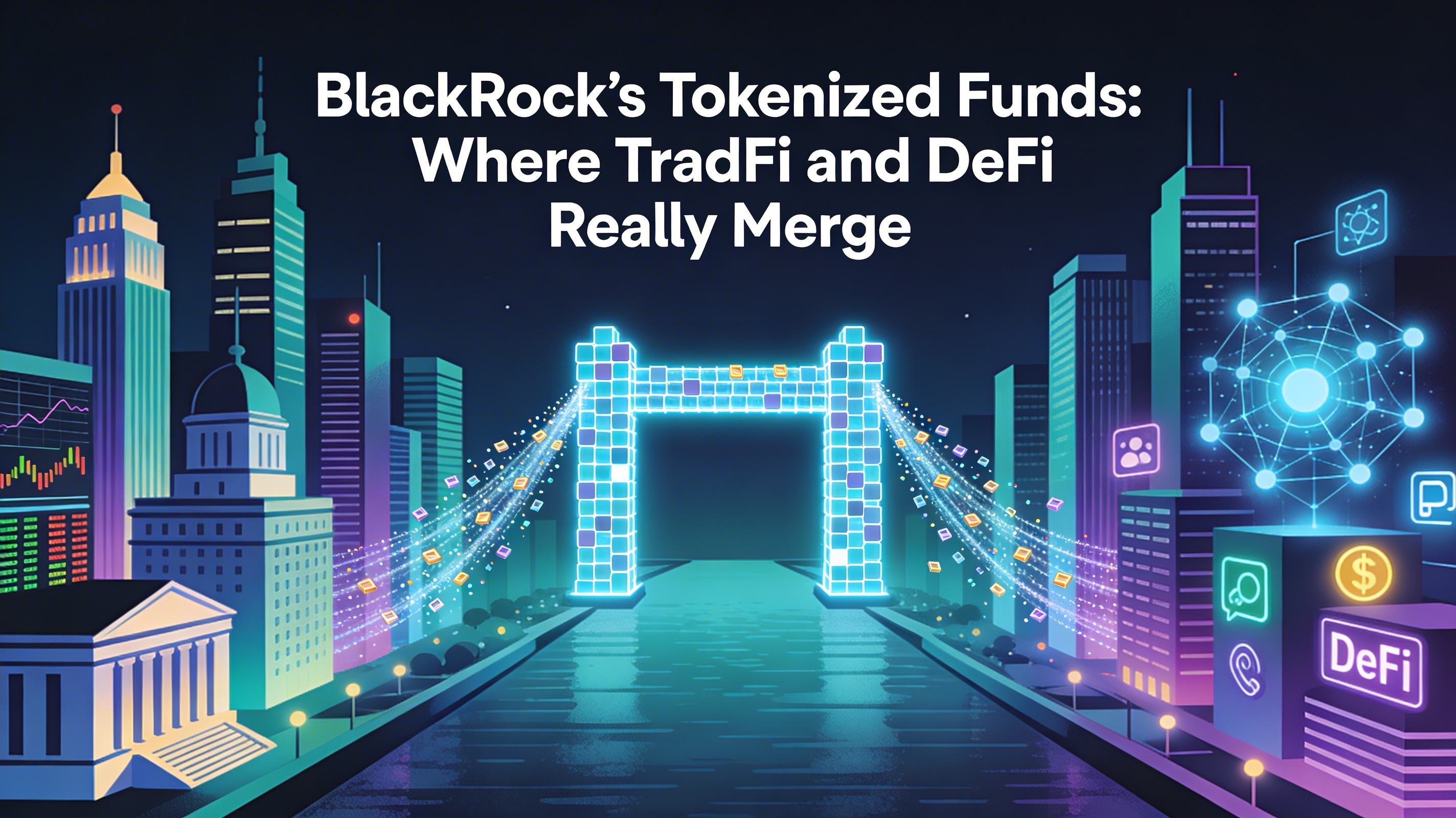

Traditional finance
is moving onto blockchain rails through tokenization, where stocks, bonds, funds, Treasuries, real estate, and other assets are represented as on-chain tokens and can trade and settle there. Major institutions and market infrastructures (big banks, asset managers, custodians, and market utilities like DTCC) are explicitly positioning tokenization as the “bridge” between TradFi and DeFi, not as a side experiment. This means that, technically, the “stock market” in the sense of order books, settlement, and custody is being rebuilt on the same infrastructure that crypto uses.
We are not headed for two totally isolated, forever‑separate markets; the rails, venues, and investor interfaces are being engineered to converge.
Dr. DeFi- The DeFi Debrief
At the same time, regulators are not trying to keep these as two completely separate universes; they are trying to create unified regulatory architectures that allow both securities and non‑securities digital assets to trade on related or even the same platforms. You see this in initiatives like the SEC’s push to enable tokenized equity trading and 24/7 equities, and in proposals to let platforms handle both “cryptoasset securities” and non‑security crypto under one licensing structure. There are even serious policy arguments for merging the SEC and CFTC themselves specifically to get a single regulatory regime for digital assets.
How far the convergence goes
On the infrastructure side, major players are already building systems where tokenized funds, tokenized deposits, stablecoins, and other digital instruments run side‑by‑side on blockchains. Market utilities like DTCC and exchanges like the NYSE are moving to blockchain-based systems for tokenized stocks and ETFs, with explicit plans for around‑the‑clock trading on these rails. Asset managers and banks are integrating crypto and tokenized products into their core offerings, so that customers see digital assets right next to equities and ETFs in the same apps and portfolio dashboards.
However, from a legal and regulatory point of view, you still have different categories: tokenized securities fall squarely under securities law and SEC jurisdiction, while non‑security tokens and commodities‑like assets sit with the CFTC or other regimes. Current regulatory roadmaps aim to let these trade in harmonized environments but keep the legal distinctions and protections (disclosures, custody rules, etc.) appropriate to each bucket. So the “merge” is more like a shared digital market stack where stocks, bonds, RWAs, stablecoins, and crypto assets all coexist and interoperate, rather than one undifferentiated asset soup.
Directional Guidance ahead?
Directionally, the big picture is: markets move on‑chain, tokenization of real‑world assets accelerates, and the line between “stock market” and “crypto market” as separate ecosystems fades at the infrastructure and user‑experience level. Regulatory initiatives like the SEC’s Project Crypto and related SEC/CFTC efforts explicitly talk about enabling America’s financial markets to “move on‑chain” while modernizing rules so crypto and traditional assets can coexist on regulated platforms. Policy thinkers are already pushing for a single combined market regulator for digital assets as a logical endpoint of this convergence.
Putting TradFi and crypto onto shared digital rails means every payment, trade, and wallet can be monitored in real time with advanced blockchain analytics and AI AML systems. CBDCs, tokenized deposits, KYC’d stablecoins, and regulated exchanges create a data-rich environment where authorities and big institutions can see flows far more clearly than in the old mixed cash/banks world. Policy reports openly talk about leveraging CBDC and digital asset data for AML/CFT, sanctions, and systemic risk monitoring, which can easily slide into financial surveillance if governance and limits are weak. Think tanks and civil-liberties voices are already warning that CBDCs and always-on analytics could become “backdoors” into everyone’s financial life and be weaponized after a crisis.
Where the sovereignty potential lives
On the flip side, the same convergence is making privacy a front‑page design requirement instead of a niche cypherpunk toy. Developers are building “compliance-friendly privacy” tools like Privacy Pools and shielded transaction systems that let users hide details while still proving they’re not sanctioned or laundering. Legal scholars and international bodies are pushing CBDC and digital asset frameworks that hard‑code privacy constraints and minimize personal data collection, especially in democracies. There is a growing regulatory narrative that privacy tech is acceptable as long as it does not protect clearly illicit activity, which gives builders room to encode civil liberties into the rails.
How this lands in practice
Realistically, the average person will be more watched: cash shrinks, on-chain and digital rails expand, and AI-driven monitoring becomes default at banks, exchanges, stablecoin issuers, and even DeFi perimeters. But for people who know what they’re doing, the toolkit for reclaiming selective privacy—choice of assets, L2s, mixers that respect sanctions, proof-of-innocence tools—gets more powerful, not less. Sovereignty won’t be “given”; it will be something you architect into your stack: which rails you use, how you on/off-ramp, and what kind of protocols and wallets you touch.
What This Means For You (And RegShield)
As TradFi and DeFi merge onto the same rails, the question is not whether you will be watched, but whether you will understand the system that is watching you and know how to move inside it with intention. The same infrastructure that powers BlackRock’s tokenized funds will power the tools you use every day, from stablecoins to DeFi protocols. If you care about sovereignty, you can’t just opt out — you have to learn the rules, see the flows, and choose your rails on purpose. That’s the work I’m doing with RegShield and The DeFi Debrief: translating this convergence into something you can actually navigate.
If you want to follow this journey and learn how to protect yourself as the markets merge, subscribe to The DeFi Debrief and watch how I build RegShield in public